The president said that prices would go down. They are still rising after his first year in office. Why? Read on.
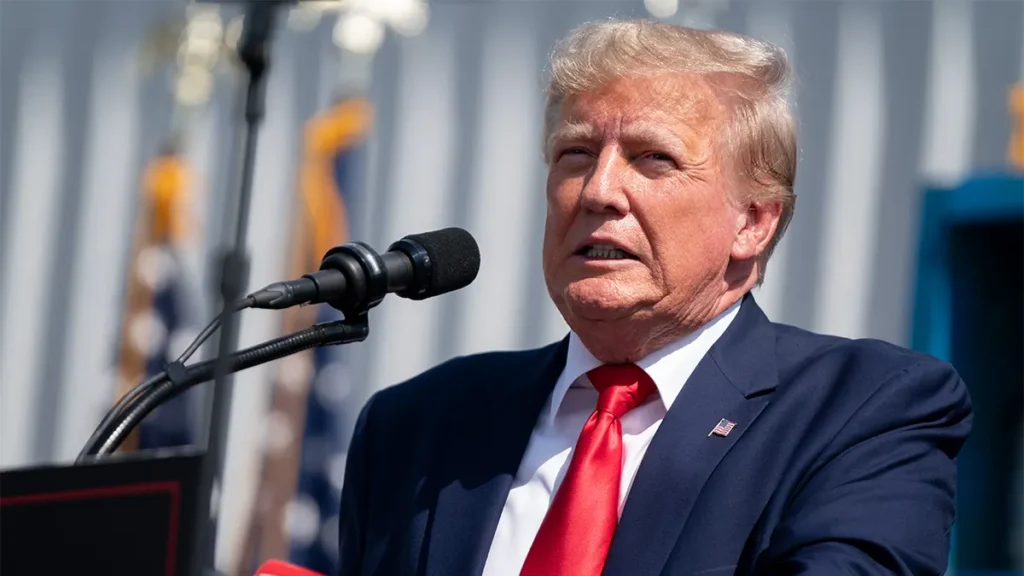
President Donald Trump is discovering that taming the American economy is more difficult than it sounds. Economic indicators indicate that, a year after his administration returned to the White House, almost every difficulty that he largely promised to resolve during the presidential campaign two years ago—cutting energy costs in half, making housing more affordable, or ending inflation—either remains a problem or has gotten worse.
That hasn’t stopped the president from slamming his critics and declaring that prosperity has returned when confronted with how his promises haven’t lived up to expectations. Democrats are using the same nerves he did with dissatisfied voters this time ahead of the midterm election in 2026. Trump stated on January 13 in front of the Detroit Economic Club, “Growth is exploding, productivity is soaring, investment is booming, incomes are rising.”
“Defeat inflation is achieved.” In point of fact, Trump’s first full month in office saw inflation of 2.8%, which is virtually unchanged at 2.7% today. According to a survey conducted by the Associated Press and the Northrop Grumman Center for Public Affairs Research and released two days after Trump’s speech, approximately 53% of adults in the United States believe that the state of the nation’s economy has gotten either slightly worse or significantly worse. Trump’s affordability record falls short of his previous pledges.
Trump made a number of bold promises as a candidate about how quickly he would cut living costs. “Starting the day I take the oath of office, I will rapidly drive prices down and we will make America affordable again,” he said during an August 2024 rally in Wilkes-Barre, Pennsylvania.
While no-one expected him to actually stop inflation as he promised − some amount of price increases are necessary in a growing economy − neither has it fallen as far as many would like.
In December, the consumer price index increased by 2.7% over the previous year. Even though inflation is significantly lower than the post-pandemic highs of nearly 9%, the Federal Reserve still wants to see 2%. Importantly, according to some economists, Trump’s policies are keeping prices higher than they would have been otherwise, rather than lowering them.
The inflation rate was dropping when Trump was inaugurated on Jan. 20, 2025. In April 2025, it continued to fall to 2.3 percent, but has since rebounded. Some of the higher costs incurred by foreign adversaries and allies as a result of a number of tariffs imposed by the White House last year are still being passed on to consumers, despite the fact that retailers have absorbed most of them. The current rate of inflation has increased by 0.7 percentage points, according to a recent academic paper. The average tariff rate in January 2024 was about 3%. The Budget Lab at Yale, a non-partisan policy research center that studies federal economic policies in the United States, says that rate is currently around 15%.
According to the AP-NORC survey that was released on January 15, approximately 58% of Americans believe that imposing new tariffs has “gone too far.” A day before the 2024 presidential election, Trump declared at a rally in Pittsburgh, Pennsylvania, that a vote for him, “means your groceries will be cheaper.” That hasn’t come to pass: Over the last 12 months, the price index for meats, poultry, fish and eggs rose 3.9%.
USA TODAY contacted the White House for comment, but conservative allies say the president should continue to promote his cost-cutting blitzing strategies.
A number of executive orders, including one declaring a national energy emergency, were signed by Trump on his first day in office. The U.S. According to the Energy Department, Trump has lowered gas prices by removing regulations. Peter St. says, “Trump has been throwing the kitchen sink in terms of executive orders” in terms of actual policy. Onge, a senior economist at the Heritage Foundation, said in an interview.
He points out that Congress − even with both chambers controlled by the GOP − has quietly resisted some of the administration’s demands for larger cuts to federal regulations and spending.
“The trick is that the vast majority of heavy lifting on the economy has to be done by Congress,” St. Onge, a contributor to Project 2025, a conservative agenda. “He’s trying with the executive orders. There’s only so much you can do.”
But Democrats say that Trump’s actions have been more likely to raise prices than to reduce them.
Ben Harris, director of economic studies at the Brookings Institution and former chief economic adviser to then-Vice President Joe Biden, stated, “We had pockets of extremely active policy making, perhaps some of the most active policy making we’ve ever seen in the first year. But most of those policies went in directions that economists would find problematic, such as an unprecedented increase in the average rate of tariffs which are ultimately paid by consumers.”